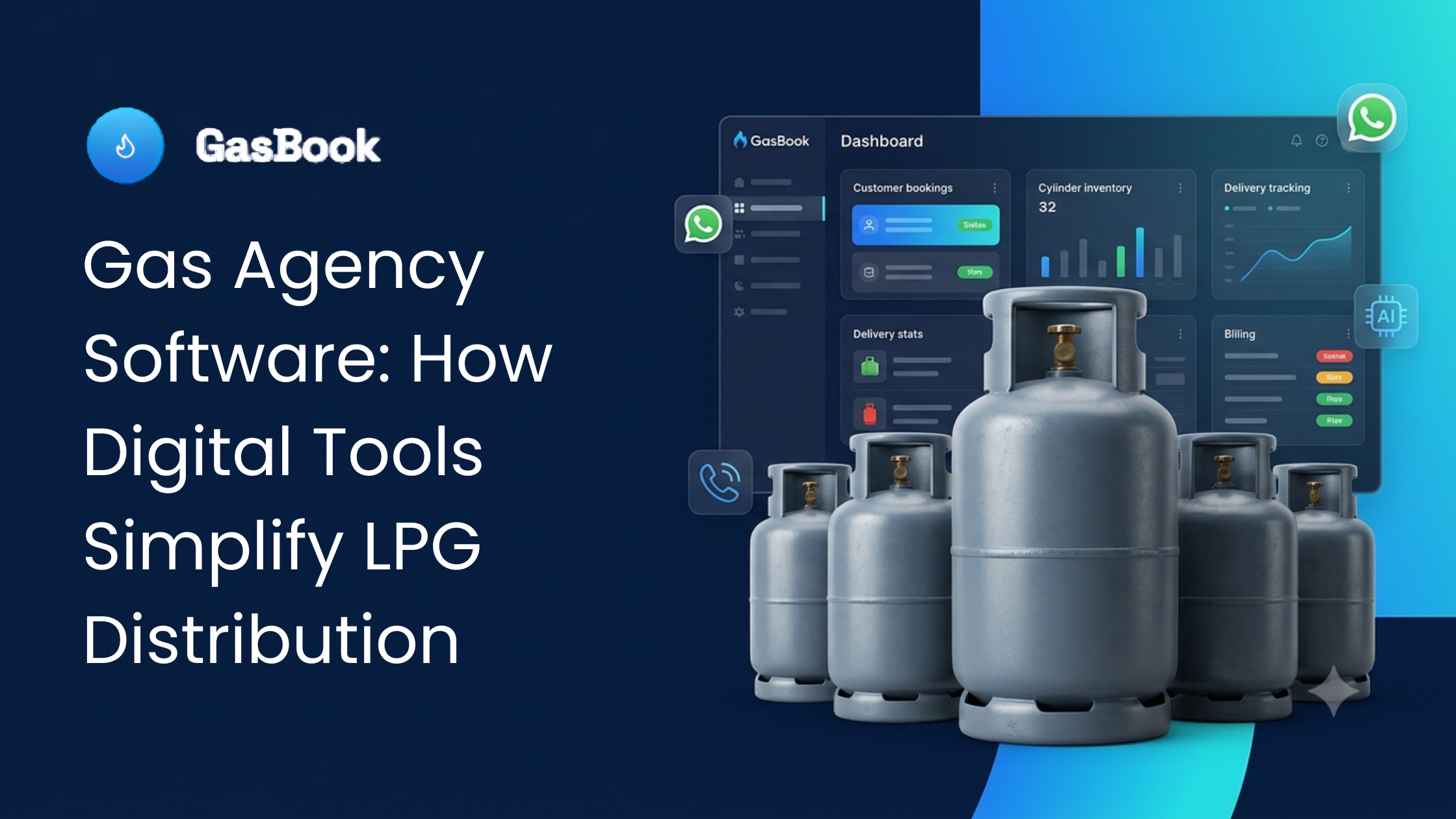
Gas Agency Software for LPG Distribution
Discover how gas agency software simplifies LPG bookings, inventory, deliveries, billing and customer management for more efficient distribution
· Samyotech Admin
Gas Agency Software: How Digital Tools Simplify LPG Distribution
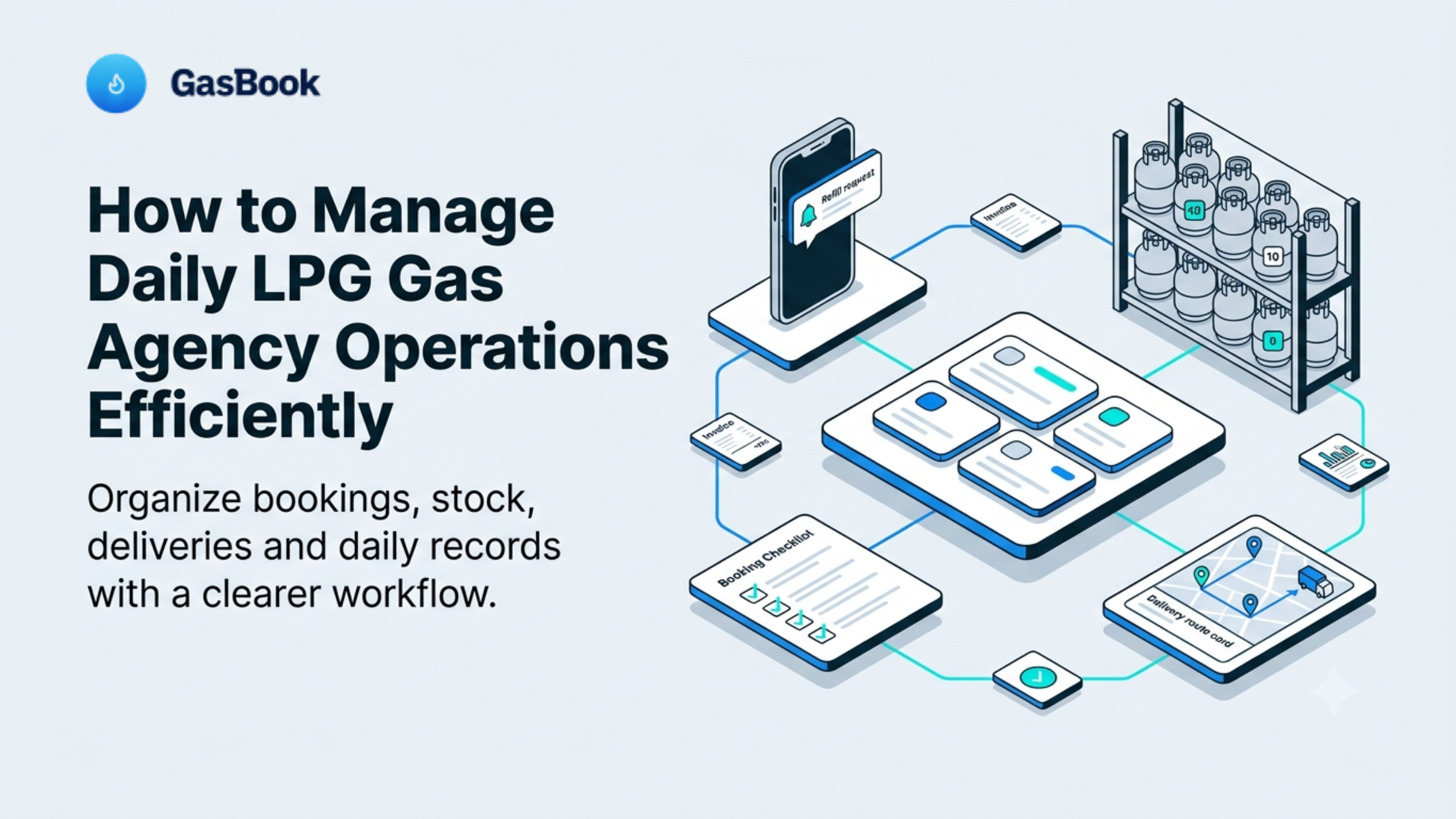
Managing an LPG distribution business involves more than receiving orders and delivering cylinders. Gas agencies need to maintain customer records, monitor filled and empty cylinder stock, organize deliveries, manage supplier information, prepare invoices and track payments.
When these activities rely on paper registers, spreadsheets and scattered messages, everyday operations can become difficult to coordinate. Information may need to be entered repeatedly, and staff may spend valuable time searching for booking details or checking stock records.
Gas agency software helps bring these essential activities into a connected digital workflow. By centralizing operational information, it can help LPG distributors reduce repetitive administrative work, improve visibility and manage day-to-day activities more efficiently.
What Is Gas Agency Software?
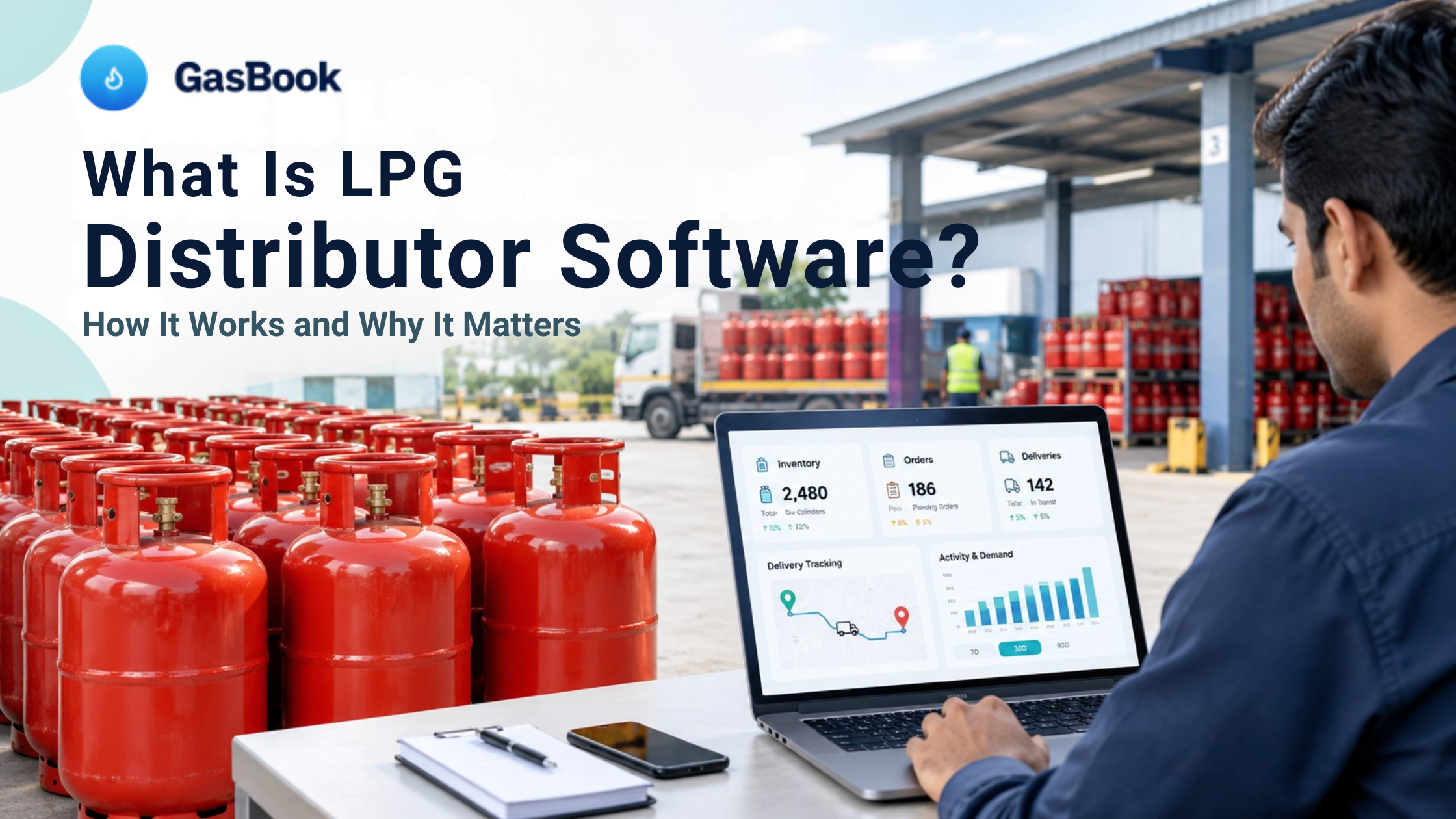
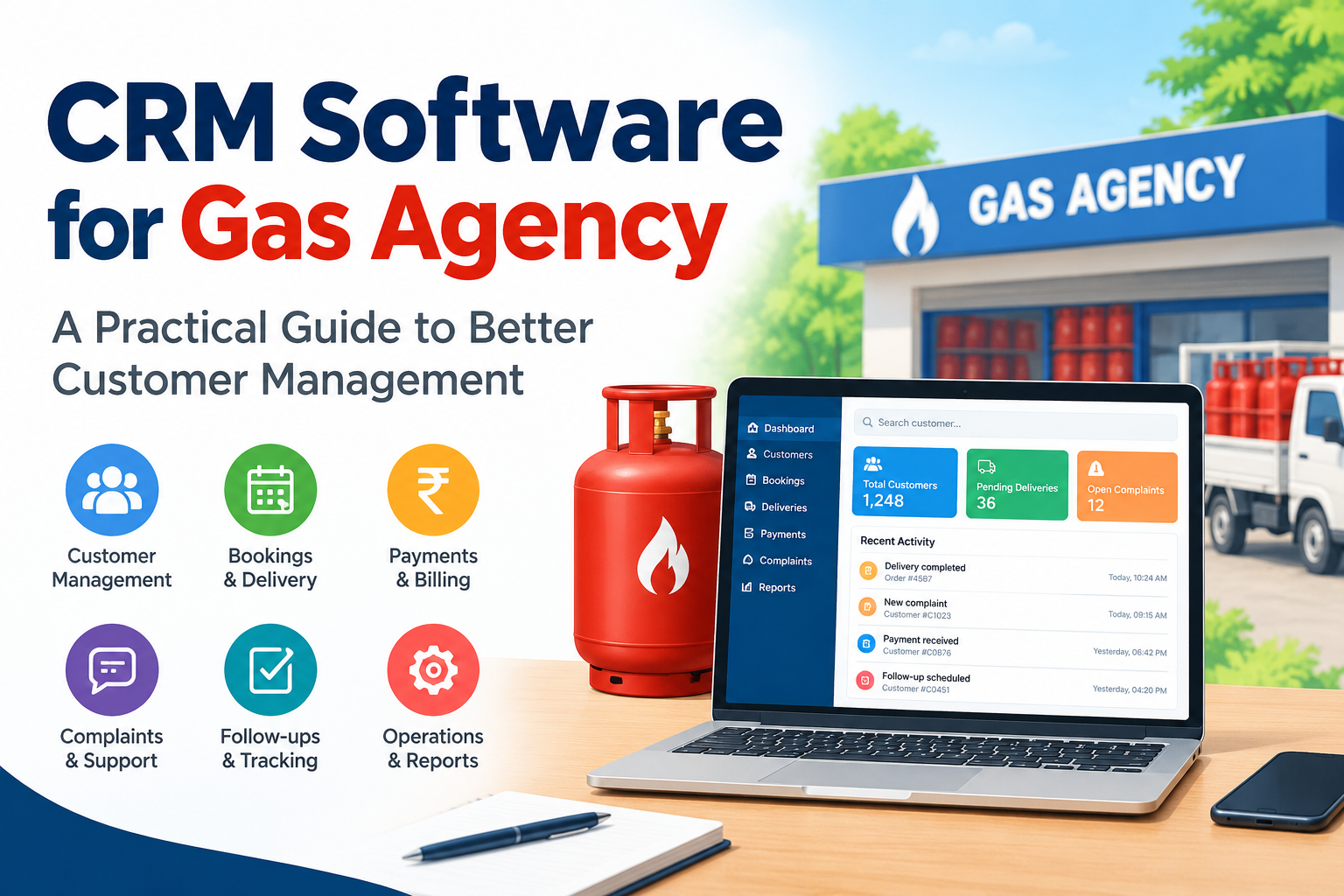
Gas agency software is a digital solution designed to help LPG agencies and distributors manage their business operations. Depending on the platform, it can bring together booking management, customer information, inventory, delivery tracking, billing, vendor records and reporting.
Instead of maintaining separate records for each department or activity, staff can work with information stored in a central system.
For example, when a customer requests a cylinder refill, the booking can be recorded and tracked through the delivery process. Relevant customer, stock and billing information can then be managed alongside the order.
The aim is to make information easier to access and everyday workflows easier to coordinate.
Why Are LPG Agencies Moving Towards Digital Tools?
Manual processes may be manageable when an agency handles a limited number of customers. As bookings and delivery volumes increase, however, maintaining accurate records across multiple activities can become more demanding.
Common operational challenges include:
- Difficulty tracking pending and completed bookings
- Limited visibility into filled and empty cylinder stock
- Repeated data entry across different records
- Time spent searching for customer or payment details
- Delays in preparing invoices and reports
- Difficulty coordinating delivery and office staff
Digital tools can help address these challenges by bringing relevant information together and reducing dependence on disconnected records.
The goal is not simply to replace paper with screens. It is to create a clearer process for managing the entire distribution workflow.
1. Simplify Customer and Booking Management
Bookings are central to LPG distribution. Agencies need to record refill requests, access customer details and identify which orders still require attention.
A digital booking workflow can help staff organize new, pending and completed bookings while maintaining relevant customer information in one place.
With LPG booking management software, agencies can reduce the need to search through registers or individual messages to find order details. Booking histories can also help staff respond to customer queries more efficiently.
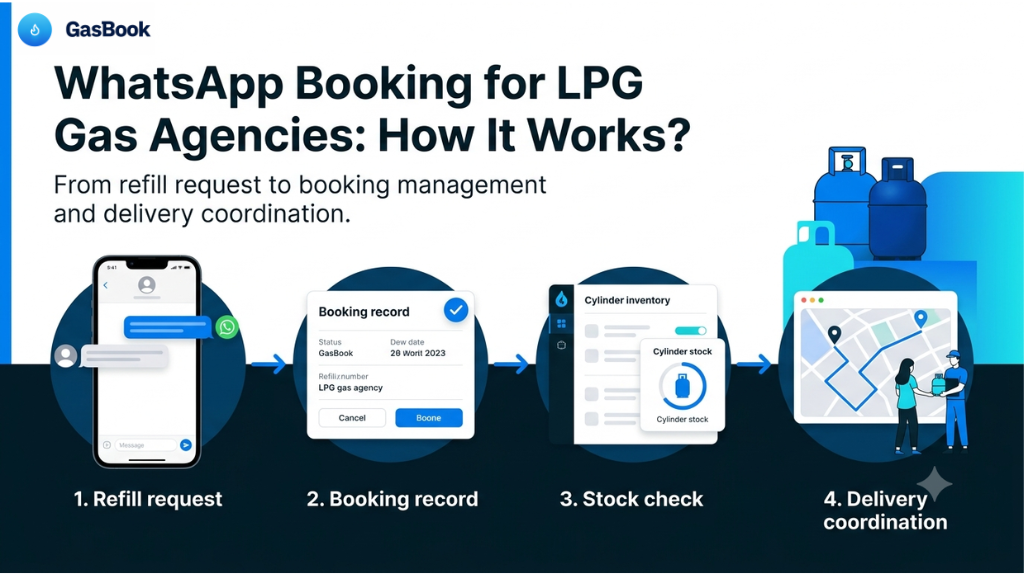
GasBook provides gas booking capabilities as part of its broader LPG operations platform. Its WhatsApp-based booking option also gives customers a familiar channel through which to request refills.
2. Improve Cylinder Inventory Management
Cylinder stock needs careful monitoring throughout the distribution process. Agencies may need to track filled cylinders, empty cylinders, different cylinder categories, stock received from suppliers and cylinders issued for delivery.
Without organized records, staff may find it difficult to understand the current stock position or investigate discrepancies.
Inventory management software for gas agencies can help centralize stock information and record inventory movements. This makes it easier to review available stock, identify potential shortages and maintain more consistent records.
A useful system should support the stock categories and workflows relevant to the agency rather than treating every cylinder as an interchangeable item.
Better inventory visibility can also support purchasing decisions and help staff coordinate stock availability with incoming bookings.
3. Organize Delivery Management
A booking is not complete until the cylinder reaches the customer. Agencies therefore need a reliable way to monitor orders that are ready for dispatch, in progress or completed.
Digital delivery management helps staff review order status and maintain a record of delivery activity.
When booking and delivery information are connected, staff can more easily identify pending orders and check whether a customer’s request has progressed through the workflow.
For agencies handling many deliveries each day, this can reduce confusion caused by separate booking lists, handwritten notes and individual follow-up messages.
4. Make Billing and Payment Records Easier to Manage
Billing is another important part of LPG distribution. Agencies need to prepare invoices, maintain transaction records and track outstanding payments.
When billing is handled separately from customer and booking records, staff may need to enter the same information more than once.
Gas agency billing software can help organize invoices and related financial records in one place. Connecting billing with customer and order information can also make it easier to retrieve transaction details when responding to queries.
Digital records do not automatically eliminate accounting errors, so agencies should still review their processes and confirm that the software supports their invoicing and reporting requirements.
5. Improve Supplier and Purchase Visibility
LPG distribution also depends on managing suppliers, purchases and incoming stock.
Maintaining supplier records alongside purchase and inventory information helps businesses understand where stock comes from and how it moves through the agency.
A centralized system can make it easier to review purchase history, check relevant supplier details and compare incoming stock records with available inventory.
For growing distributors, this visibility can support more organized purchasing and stock planning.
6. Use Reporting to Make Better Decisions
Business reports help owners move beyond day-to-day task management and understand how their agency is performing.
Depending on the software, reports may cover bookings, sales, purchases, stock movements, deliveries, payments and customer activity.
When information is maintained consistently, these reports can help owners identify operational bottlenecks and spot areas that need attention.
Instead of manually combining figures from multiple spreadsheets, managers can use consolidated information to support routine business decisions.
The usefulness of a report depends on the quality of the underlying records, so consistent data entry remains important.
7. Simplify Customer Communication with Automation
Customer communication can take up a considerable amount of staff time. Booking confirmations, delivery updates and responses to routine questions may require repeated manual follow-ups.
Gas agency automation can help reduce repetitive work by supporting selected notifications and communication workflows.
WhatsApp is particularly relevant when customers and staff already use it for everyday communication. GasBook supports WhatsApp-based refill requests and provides an AI assistant designed to help staff access information and perform certain tasks through WhatsApp.
Before adopting any automation feature, agencies should check which actions are supported, how customer data is handled and whether staff can review or correct information when needed.
Automation works best when it complements a clear operational process rather than adding another disconnected tool.
How to Choose the Right Gas Agency Software
Not every platform offers the same capabilities. Before selecting software, consider these questions:
- Does it cover your workflow? Check whether bookings, customers, inventory, deliveries and billing can be managed in a way that fits your business.
- Can staff find information easily? A centralized system should make relevant records straightforward to access.
- Does it track the stock you handle? Confirm that it supports the cylinder categories and stock movements used by your agency.
- Does it support customer communication? Consider booking channels and notifications that suit your customers.
- Are the reports useful? Review whether the available reports answer your operational and financial questions.
- Can your team adopt it? Ease of use, onboarding and support matter as much as the feature list.
- Does it fit your budget and requirements? Compare pricing, implementation needs and available features before making a decision.
A good fit should solve real operational problems without creating unnecessary complexity.
How GasBook Supports LPG Distribution
GasBook brings together key LPG agency activities, including customer management, bookings, inventory, delivery management, vendor records, invoicing and reporting.
Its WhatsApp-based customer interactions and AI assistant add another way for agencies to manage selected requests and access information.
For agencies looking to move away from scattered records, a centralized platform can provide a more organized way to oversee everyday operations. The right setup will depend on the agency’s workflow, team and requirements.
You can explore GasBook to learn more about its approach to managing LPG agency operations.
Conclusion
Efficient LPG distribution depends on keeping customer information, bookings, stock, deliveries and billing organized. When these activities are handled through disconnected records, staff can spend more time coordinating information than managing the work itself.
Gas agency software can help connect these activities, improve operational visibility and reduce repetitive administrative tasks. Features such as inventory tracking, delivery management, reporting and selected communication automation can make daily processes easier to coordinate.
Before choosing a solution, assess your agency’s actual requirements and confirm that the platform supports the workflows your team needs. A practical digital system should make operations clearer, not more complicated.
For LPG distributors looking to centralize their daily processes, visit GasBook to explore the available capabilities.
See how GasBook handles this for you
Bookings, stock and invoicing in one system — with WhatsApp built in.