
How to Manage Daily LPG Gas Agency Operations Efficiently
Learn how to improve LPG gas agency operations with organized bookings, inventory checks, delivery tracking, billing, customer communication and daily reporting.
· Samyotech Admin
How to Manage Daily LPG Gas Agency Operations Efficiently
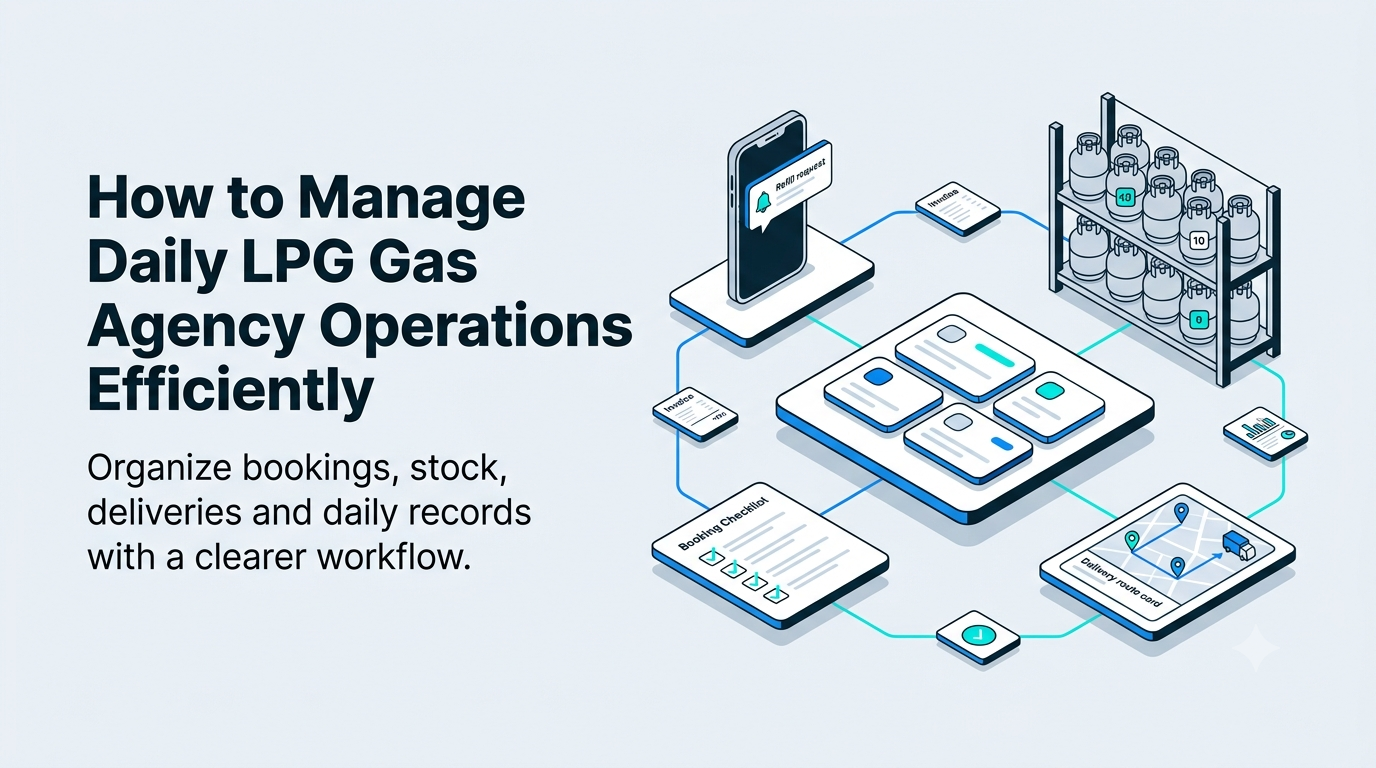
Running an LPG gas agency involves more than accepting refill requests. Every day, agency teams may need to manage customer bookings, monitor cylinder stock, coordinate deliveries, maintain records, handle payments and respond to customer queries. When these activities are tracked separately, even routine work can become difficult to manage.
Improving LPG gas agency operations starts with creating a consistent process for everyday tasks. Clear records, organized responsibilities and timely updates help teams keep track of what needs attention and reduce avoidable confusion.
Here are practical ways to make daily LPG agency management more organized and efficient.
1. Keep Customer Records Organized
Accurate customer records help agency staff identify customers, check previous booking details and respond to routine enquiries. When information is scattered across notebooks, spreadsheets and individual messages, finding the right record can take extra time.
Maintain a consistent record of relevant customer details, booking history, contact information and service-related notes. Limit access to personal information to authorized staff and follow applicable data-protection requirements.
A centralized customer record system can make it easier for team members to find information without repeatedly asking customers to provide the same details.
2. Record Every Booking in One Place
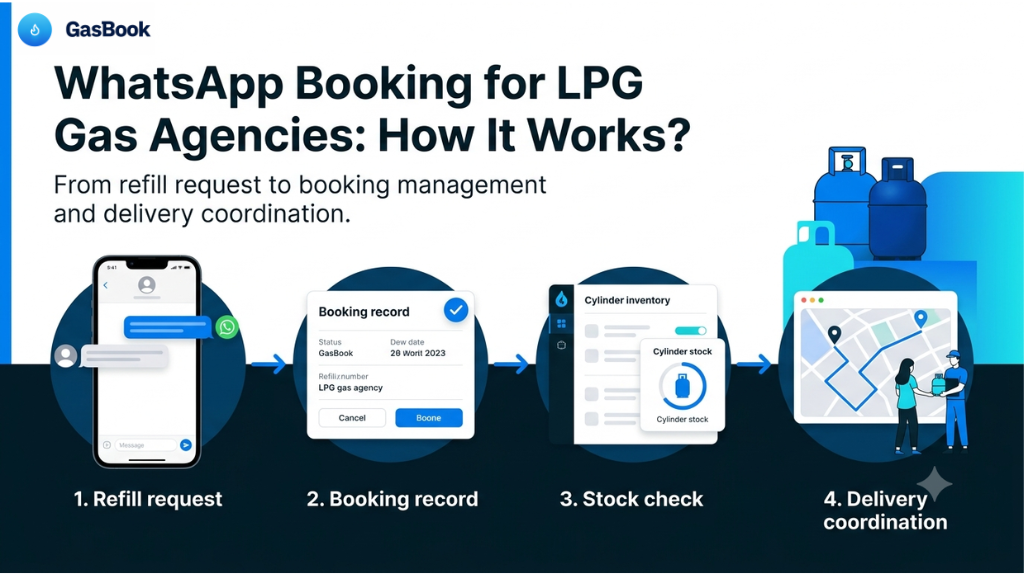
Refill requests may arrive through phone calls, in-person visits, messaging channels or other supported methods. The challenge is ensuring that every request is recorded and followed up.
Use a consistent booking process:
- Receive the customer's refill request.
- Identify the customer and check the relevant details.
- Create or update the booking record.
- Review the booking's current status.
- Communicate the next steps to the customer.
- Close the booking record after the appropriate process is completed.
A single booking register or suitable management system can help staff avoid duplicate entries and make pending requests easier to identify. If the agency accepts requests through multiple channels, establish a clear process for bringing them into the same tracking system.
3. Monitor Cylinder Stock Regularly
Inventory visibility is important for planning daily operations. If the available stock record is outdated, staff may find it difficult to answer customer questions or coordinate the next steps.
Create a routine for checking stock records and reconciling them with physical inventory. Record relevant stock movements, including receipts, dispatches, returns and adjustments, according to the agency's operational process.
A useful inventory routine includes:
- Reviewing available stock at the start of the working day
- Recording incoming and outgoing cylinders promptly
- Checking discrepancies between recorded and physical quantities
- Flagging low-stock situations for review
- Maintaining clear records of stock movement
A digital inventory system can make these records easier to update and review. Its value depends on how consistently staff enter information and whether the system supports the agency's actual workflow.
4. Plan Deliveries and Track Pending Orders
Delivery coordination requires a clear view of which bookings are ready, which are pending and which have been completed. Without a reliable status record, staff may need to contact different team members to find out what happened to an order.
Maintain a delivery register that connects each relevant booking with its current status and delivery details. Assign responsibilities clearly so that the team knows who is handling each stage.
At the beginning of the day, review pending bookings and prioritize work according to the agency's established procedures. Update records when a delivery is dispatched, completed or requires follow-up.
If delivery tracking tools are available, use them to give authorized staff a more current view of progress. Avoid marking a booking as completed until the relevant confirmation has been recorded.
5. Standardize Billing and Payment Records
Billing can become difficult to reconcile when booking information, invoices and payment records are maintained separately. A consistent process helps the agency keep track of amounts due, payments received and unresolved discrepancies.
For each relevant transaction:
- Record the booking or transaction reference.
- Issue the appropriate invoice or receipt.
- Record payment status accurately.
- Review outstanding amounts according to the agency's process.
- Reconcile records at the end of the day or at the scheduled interval.
Digital invoicing and reporting tools may reduce repetitive data entry, depending on their capabilities. Staff should still verify important entries and follow applicable accounting, tax and LPG-sector requirements.
6. Make Customer Communication Consistent
Customers often contact an agency to ask about refill requests, booking progress, delivery arrangements or payment-related questions. Clear communication can reduce repeat enquiries and help customers understand the next step.
Use standard responses for common questions, while making sure that any information shared is accurate and appropriate for the customer. Where supported, confirmation messages or status updates can help customers understand whether a request has been recorded or requires further action.
WhatsApp and other messaging channels can be useful ways to receive enquiries, but messages should be captured in the agency's booking workflow rather than left scattered across personal chats. Do not assume that simply receiving a message means a booking has been properly recorded.
7. Assign Responsibilities to the Team
Daily operations become easier to coordinate when everyone knows which tasks they are responsible for. Unclear ownership can lead to repeated work, missed follow-ups or uncertainty about the status of an order.
Depending on the size of the agency, responsibilities may cover:
- Customer enquiries and booking entry
- Stock updates and inventory checks
- Delivery planning and status updates
- Billing and payment records
- Daily reporting and issue follow-up
Review responsibilities at the start of the day and make sure handovers are documented. In smaller agencies, one employee may handle several functions, but the process should still make it clear which tasks are pending and who will complete them.
8. Review Daily Reports and Pending Tasks
A brief daily review helps the team spot unresolved work before it carries over into the next day. The information available will depend on the agency's recordkeeping process or software.
Useful items to review include:
- New bookings and pending requests
- Completed and outstanding deliveries
- Stock movements and inventory discrepancies
- Invoices, payments and unresolved billing questions
- Customer enquiries requiring follow-up
- Operational issues that need escalation
Use reports to identify what needs attention, not simply to produce numbers. If a recurring delay or discrepancy appears, investigate its cause and adjust the process where appropriate.
9. Use Software to Connect Routine Workflows
Manual records can be sufficient for a small operation with limited activity, but they may become harder to maintain as the number of customers, bookings and daily transactions grows.
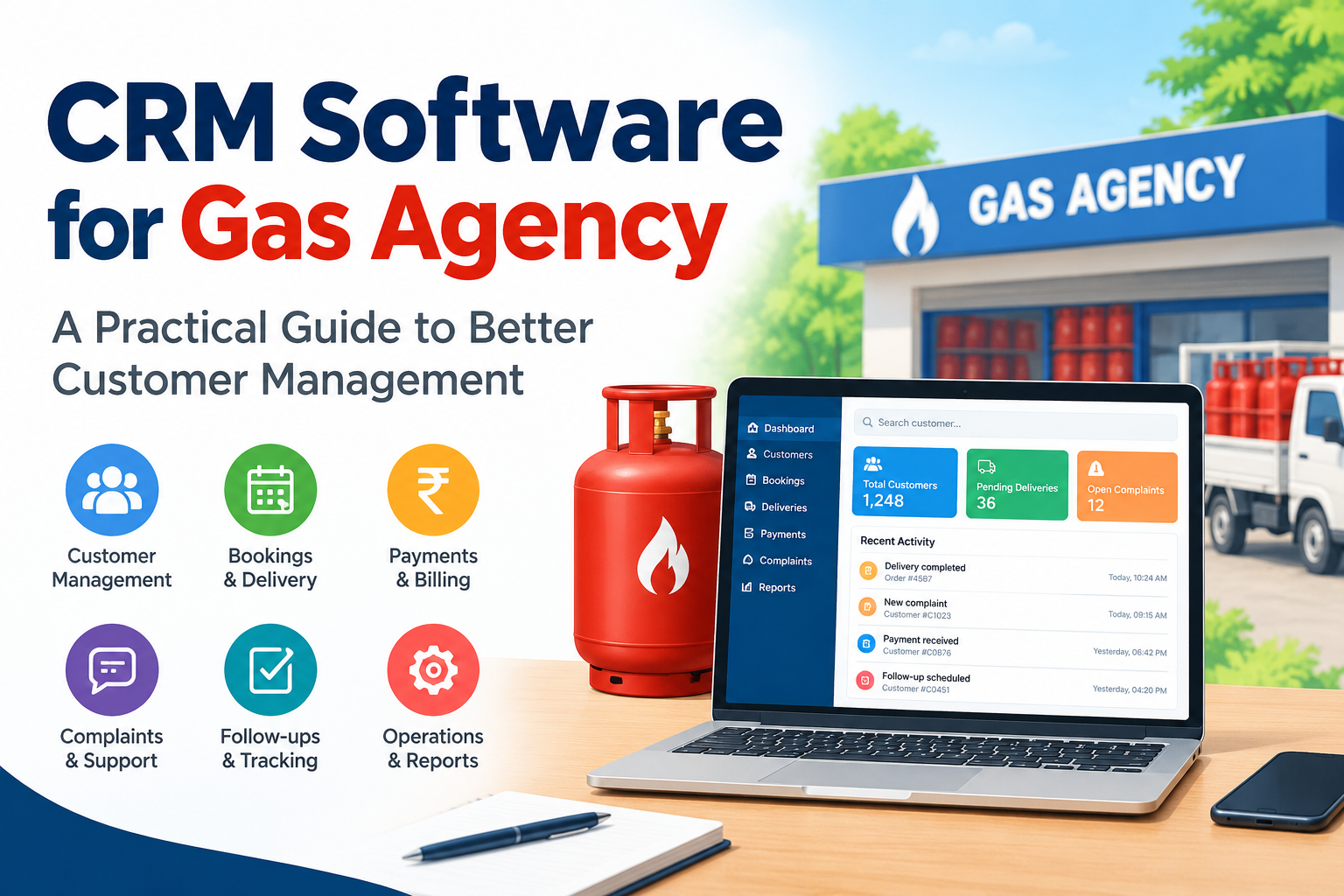
Gas agency management software can help bring functions such as customer management, booking records, inventory, delivery coordination, invoicing and reporting into a more organized workflow. The specific benefits depend on the features available and how well the software fits the agency's processes.
Before choosing a system, consider:
- Which daily tasks consume the most time?
- Can staff find customer and booking records easily?
- Does the system support the booking channels the agency uses?
- Can inventory and delivery records be maintained consistently?
- Are invoices and reports available in useful formats?
- Can the team learn the system without unnecessary complexity?
- Are access controls, data handling and support arrangements suitable?
Ask the provider to demonstrate the actual workflow you need. Confirm which functions are included, which require configuration and which still need manual input.
You can explore GasBook to review its LPG agency management offering and assess whether its available features match your operational needs.
10. Build a Simple Daily Operations Checklist
A checklist helps staff follow the same process even when the agency is busy. Adapt the following routine to your business, staffing and applicable operating requirements.
Start of day
- Review pending bookings and customer follow-ups.
- Check the latest available stock records.
- Review delivery priorities and team responsibilities.
During the day
- Record new refill requests promptly.
- Update booking and delivery statuses.
- Record stock movements and relevant transactions.
- Respond to customer enquiries using accurate information.
End of day
- Review completed and pending bookings.
- Reconcile relevant inventory and payment records.
- Identify unresolved customer issues.
- Prepare a handover or task list for the next working day.
A checklist works best when it reflects actual agency procedures and has a clear owner. It should complement, not replace, any mandatory safety, regulatory or accounting processes.
Conclusion
Efficient LPG gas agency operations depend on consistent records, clear responsibilities and reliable follow-up. Organizing customer information, bookings, stock, deliveries, billing and communication can help an agency understand what is happening throughout the day and where attention is needed.
Start by identifying the workflow that causes the most delays, standardize it and review the results. As operational needs grow, suitable management software may help connect these activities and reduce the effort required to keep records up to date.
The goal is not to add more tools for their own sake. It is to create a daily process that staff can follow consistently, customers can understand and managers can review with confidence.
See how GasBook handles this for you
Bookings, stock and invoicing in one system — with WhatsApp built in.