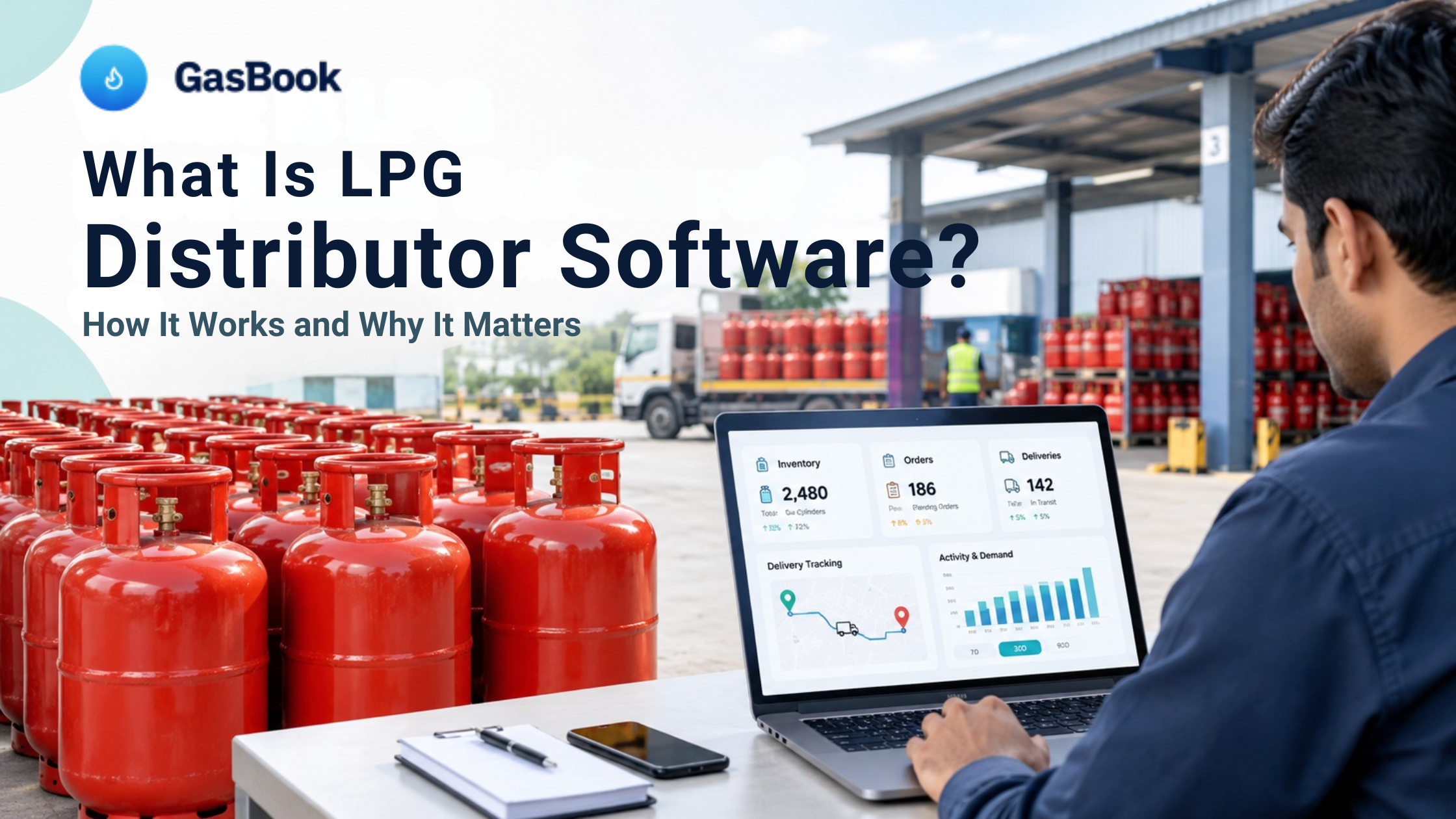
What Is LPG Distributor Software and How Does It Work?
Discover what LPG distributor software does, how it helps manage orders, inventory, deliveries and billing, and what gas agency owners should consider when choosing a digital solution for their daily operations.
· Samyotech Admin
What Is LPG Distributor Software and How Does It Work?
Managing an LPG distribution business involves more than receiving and delivering gas cylinders. Gas agencies and distributors must coordinate customer orders, monitor cylinder stock, maintain billing records, organise deliveries and keep daily business information accurate.
When these activities are handled across separate registers, spreadsheets and manual processes, it can become difficult to maintain a clear view of daily operations. This is where LPG distributor software can help.
But what exactly does this software do, how does it work, and what should a gas agency consider before choosing a solution? Let's explore the essentials.
What Is LPG Distributor Software?
LPG distributor software is a digital system designed to help gas distributors and agencies organise business activities through a central platform.
Depending on the solution, it may support tasks such as customer order management, cylinder inventory tracking, delivery coordination, billing, payment records and business reporting.
Instead of maintaining information across several disconnected records, a distributor can use software to organise relevant operational data in one place. The available features depend on the product and its configuration.
The goal is to make routine processes easier to monitor, reduce avoidable manual work and help staff access the information they need.
How Does LPG Distributor Software Work?
Although individual platforms differ, the general workflow usually follows a few common steps.
1. Customer and Order Management
The process begins when a customer places an order. The agency records the relevant customer details and booking information, then tracks the order through the appropriate stages.
A digital order management system can make it easier for staff to review pending requests, identify completed orders and reduce confusion caused by scattered records.
Depending on the software, customer information and booking histories may also be available for future reference.
2. Inventory and Cylinder Tracking
Accurate stock information is important for planning distribution activities. Agencies need to know how many cylinders are available, how stock moves and whether recorded quantities match physical inventory.
Inventory management features can help staff record stock movements, review available quantities and identify discrepancies that require investigation.
For distributors handling multiple cylinder categories or locations, the ability to organise inventory records clearly can be particularly useful.
3. Delivery Coordination
Once an order is ready for fulfilment, the agency must coordinate its dispatch and delivery.
Delivery management tools may help organise pending orders, assign delivery tasks, record completion and monitor outstanding requests. More advanced systems may provide additional scheduling or tracking features.
The specific capabilities vary, so distributors should verify which delivery functions are included before choosing a platform.
4. Billing and Payment Records
Billing is another important part of gas agency operations. Staff may need to prepare invoices, record payments and maintain transaction histories.
Software with appropriate billing and accounting functions can help organise these records and make it easier to review transactions. It may also support business reporting, depending on the available features.
Distributors should check whether the software supports their required tax, invoicing and accounting workflows before adopting it.
5. Reports and Operational Visibility
Business records become more useful when they can be reviewed systematically.
Reporting features may help owners examine order volumes, stock movements, delivery performance and other operational information. This can make it easier to identify recurring problems and decide where processes need improvement.
The quality of these reports depends on the information entered and the capabilities of the selected software.
Key Benefits of LPG Distributor Software
Better Organisation of Daily Operations
A centralised system can make important records easier to locate and maintain. Staff spend less time switching between different files and can follow a more consistent process for handling routine tasks.
Improved Inventory Visibility
Digital stock records can help agencies review cylinder availability and monitor recorded movements. Regular reconciliation is still necessary to ensure that the information matches physical stock.
More Structured Order Management
Keeping order information organised can help staff distinguish between new, pending and completed requests. This may reduce missed updates and make the booking process easier to manage.
Easier Delivery Coordination
Organised delivery records can help teams understand which orders require attention and which have been completed. This is especially helpful when a business handles many orders throughout the day.
More Accessible Business Records
When records are stored systematically, authorised staff can find relevant information more easily. Depending on the platform, reporting tools may also help owners review operations without manually compiling every report.
Reduced Dependence on Manual Processes
Automating suitable administrative tasks can reduce repetitive data entry and the effort required to maintain separate records. However, staff training, accurate data entry and regular checks remain important.
Manual Management vs Digital LPG Distribution Software
| Business activityManual approachDigital approach | ||
| Order management | Paper registers or separate spreadsheets | Organised digital order records |
| Inventory | Manual stock entries and reconciliation | Recorded stock movements and inventory reports |
| Delivery coordination | Calls, notes and separate lists | Centralised delivery records and task tracking |
| Billing | Manually prepared records | Digital billing, where supported |
| Reporting | Information compiled from multiple records | Reports generated from available system data |
Digital software does not automatically eliminate errors. Its effectiveness depends on the quality of the data, staff adoption and how well the system fits the agency's actual workflow.
How to Choose the Right LPG Distributor Software
Before investing in a solution, evaluate the needs of your business rather than selecting a platform based on the number of features alone.
Consider the following factors:
1. Essential features: Identify whether you need inventory tracking, booking management, delivery coordination, billing, customer records or reporting.
2. Ease of use: Staff should be able to learn the system without unnecessary complexity. Ask for a demonstration of the workflows they use every day.
3. Data access and security: Understand how business records are stored, who can access them and what backup and recovery arrangements are available.
4. Reporting capabilities: Check whether the system provides useful reports for your operational and management requirements.
5. Support and training: Ask what onboarding, technical support and staff training are included.
6. Total cost: Review setup charges, subscription fees, user limits, additional modules and other ongoing costs before making a decision.
7. Suitability for your operations: Confirm that the software matches your business model and existing processes. Do not assume that every LPG platform supports every type of distributor workflow.
Is LPG Distributor Software Suitable for Small Gas Agencies?
Software can be useful for both small and larger distributors, but the right choice depends on operational complexity, budget and business needs.
A smaller agency may initially need better organisation of customer records, orders and inventory. A larger distributor may require more extensive reporting, multi-location stock visibility or coordination across several teams.
Start by identifying the processes that consume the most time or produce the most frequent errors. Then compare solutions based on how well they address those specific problems.
Final Thoughts
LPG distributor software provides a way to organise key activities such as order management, inventory tracking, delivery coordination and billing. When the available features match the needs of the business, a digital system can make everyday records easier to maintain and operations easier to monitor.
For gas agency owners, the first step is to understand their current workflow, identify recurring challenges and evaluate software that addresses those needs.
If you are exploring digital tools for LPG distribution, learn more about GasBook and verify its available features, pricing and suitability for your agency before making a decision.
See how GasBook handles this for you
Bookings, stock and invoicing in one system — with WhatsApp built in.