
Gas Agency Management System: A Complete Guide
Learn how a gas agency management system can streamline LPG bookings, inventory, deliveries, billing, customer management and daily operations.
· Samyotech Admin
Gas Agency Management System: A Complete Guide for LPG Agencies
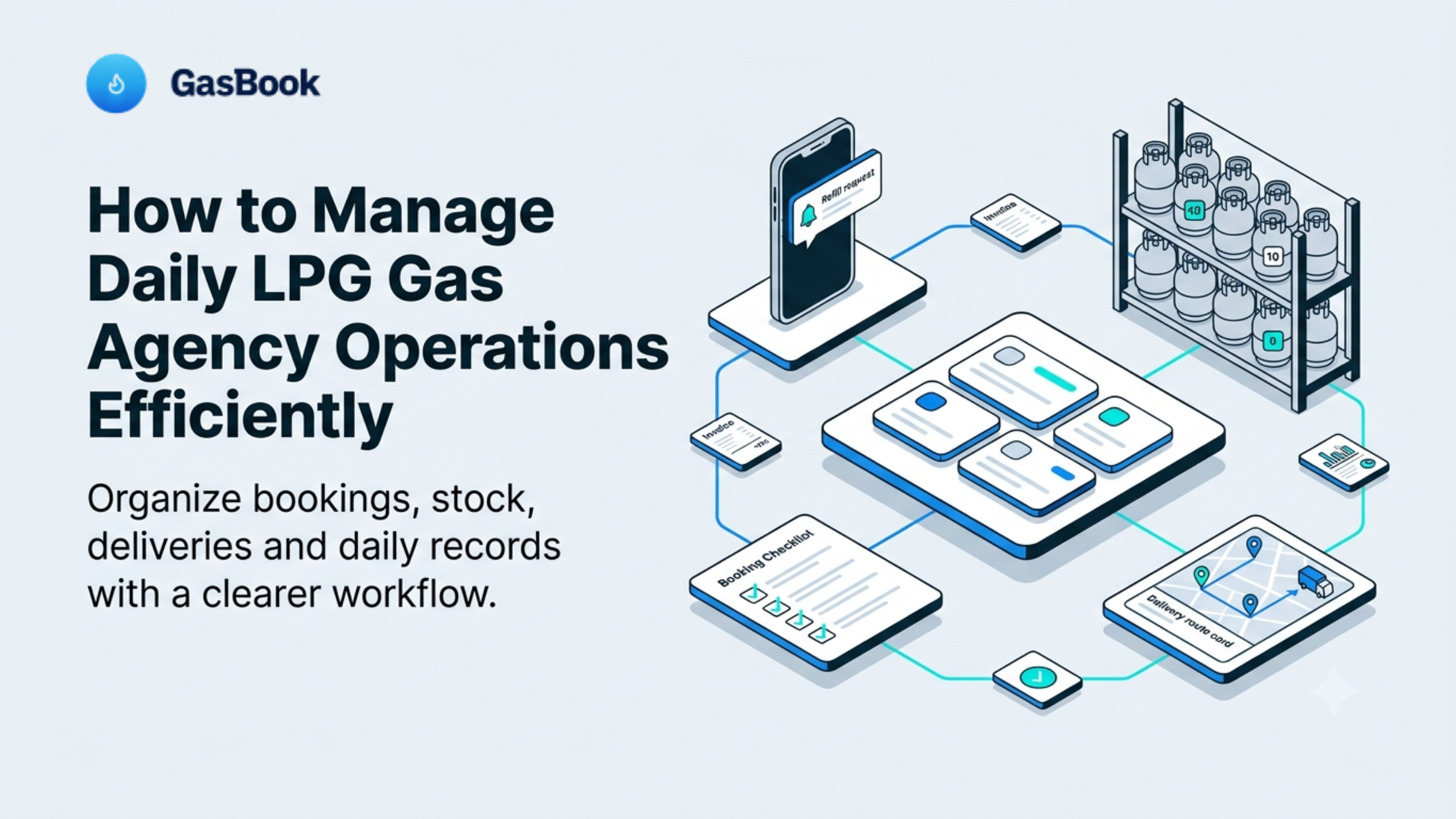
Running an LPG agency involves much more than taking cylinder bookings and delivering them to customers. Every day, an agency has to manage customer records, bookings, cylinder stock, deliveries, invoices, payments, vendors and business reports.
When these activities are managed through registers, spreadsheets, phone calls and separate records, keeping everything accurate becomes increasingly difficult as the business grows.
A gas agency management system brings these operations together in one digital platform. It can help LPG agencies manage bookings, inventory, deliveries, billing and customer information while reducing repetitive manual work.
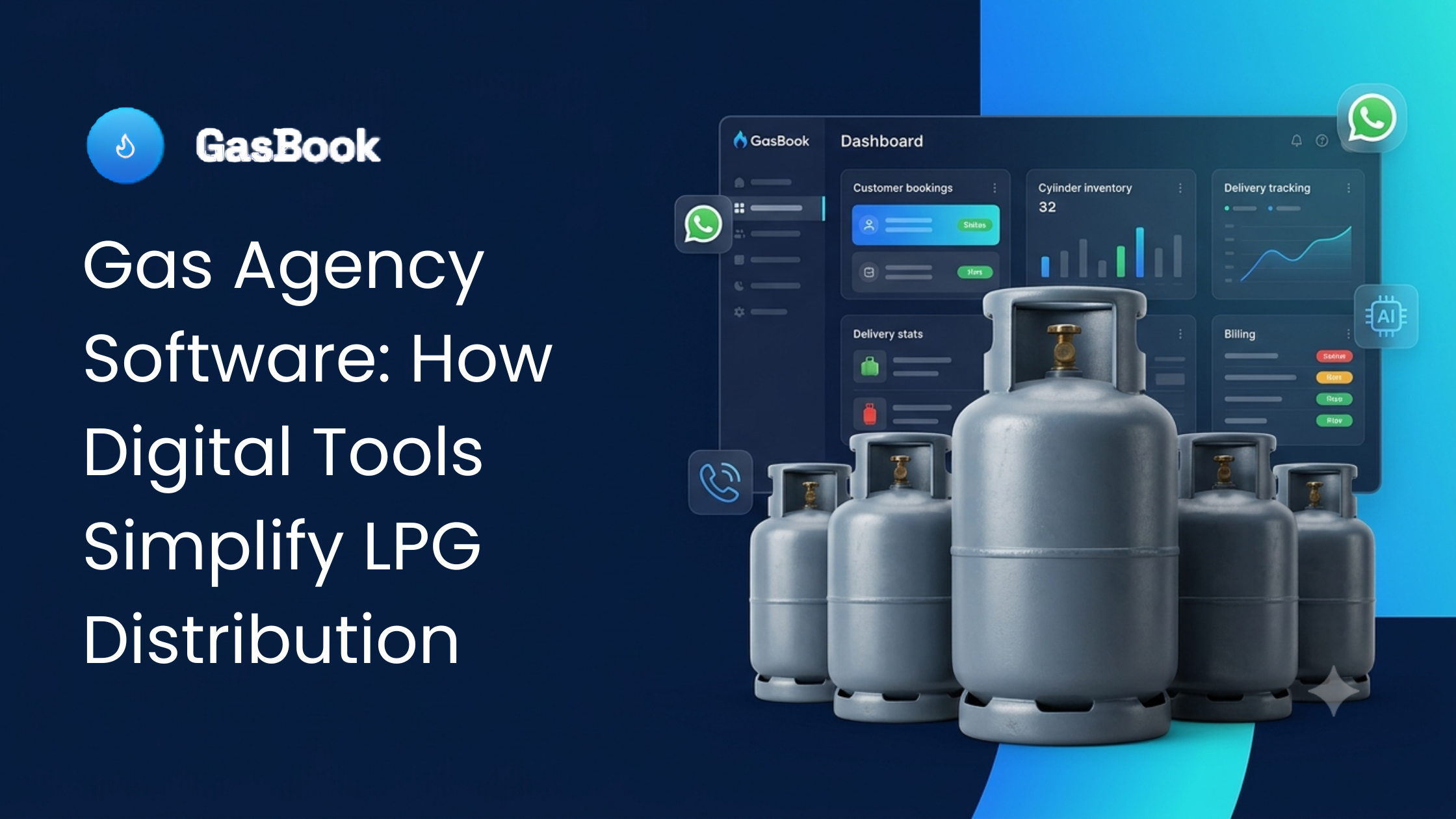
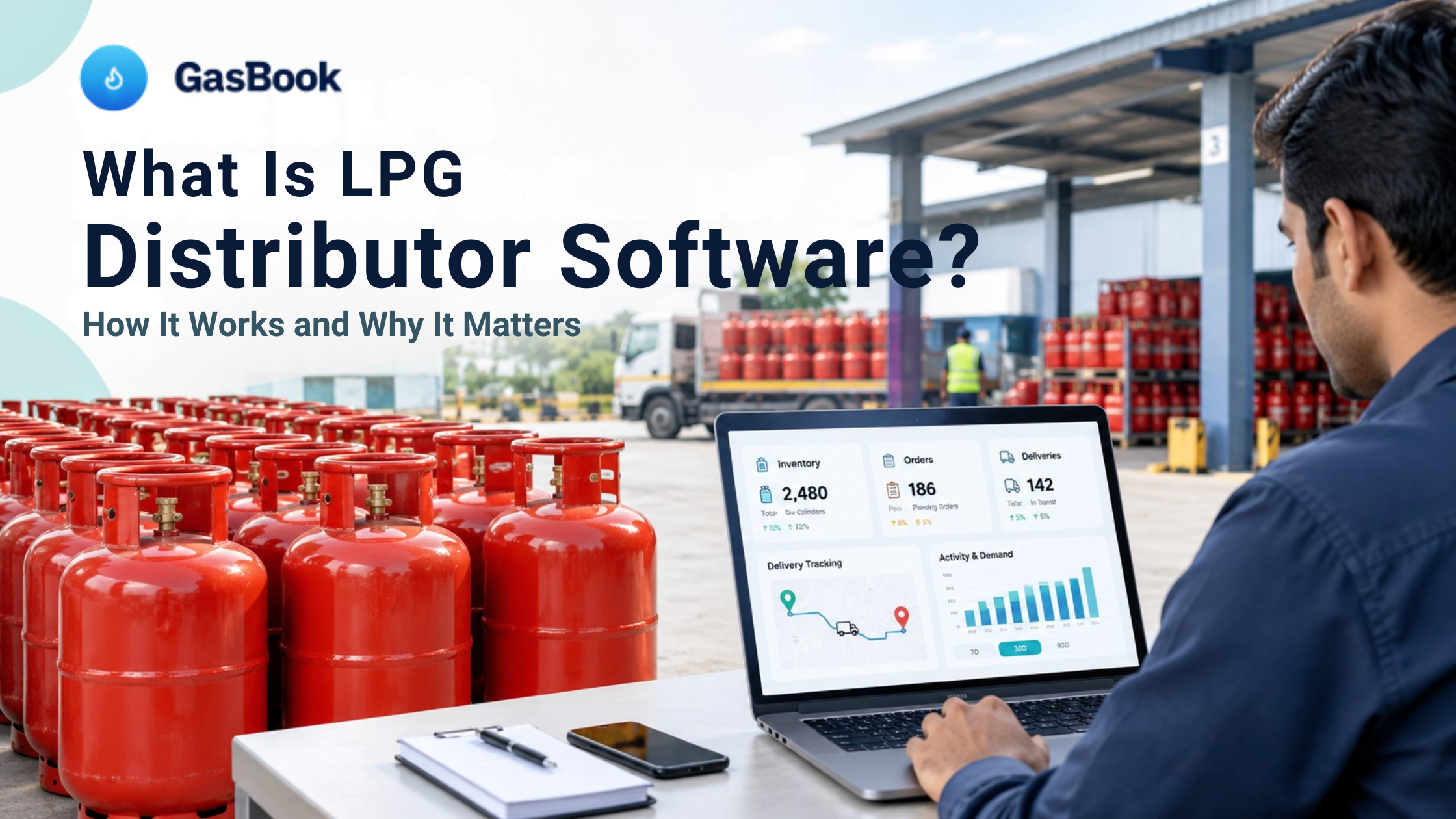
For agencies looking to improve operational efficiency and gain better visibility into their business, solutions such as GasBook provide a centralized way to manage everyday LPG operations.
What Is a Gas Agency Management System?
A gas agency management system is software designed specifically to help LPG agencies and distributors manage their daily business operations.
Instead of maintaining separate records for bookings, customers, inventory, deliveries and billing, businesses can manage these activities through a connected system.
A typical gas agency management system can include:
- Customer management
- LPG cylinder booking
- Delivery management
- Inventory and stock management
- Vendor management
- Billing and invoicing
- Payment tracking
- Reports and analytics
- Multi-branch management
- Customer communication
- Automation
The objective is simple: connect the different stages of an LPG agency's workflow so that information does not have to be entered and maintained repeatedly.
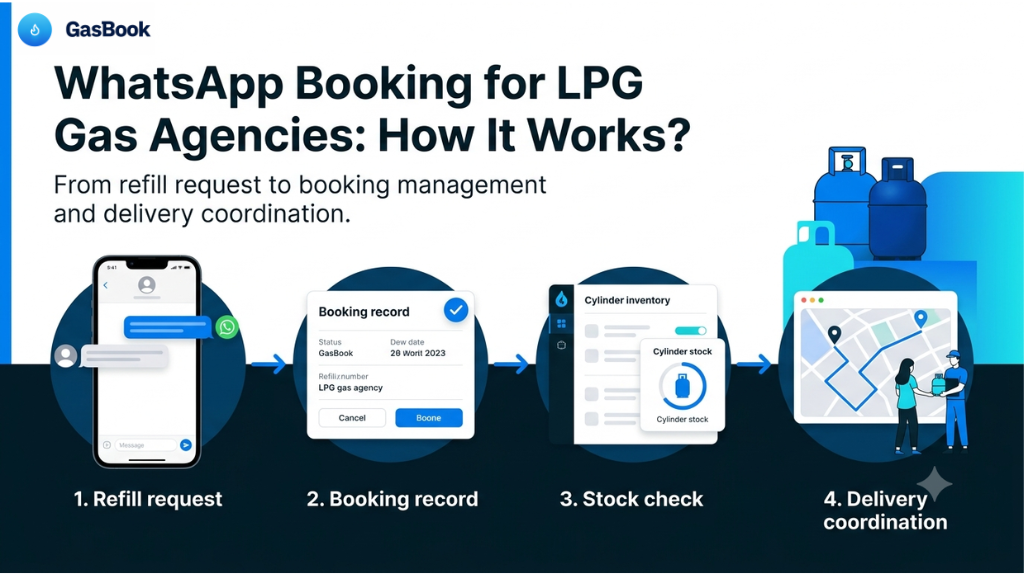
For example, a customer's refill request can become a booking, move into the delivery workflow, update stock after delivery and generate the relevant invoice. A connected system can make this process easier to monitor than managing each stage separately.
Why Do LPG Agencies Need Gas Agency Software?
Manual processes may work for smaller operations, but they become harder to manage when customer numbers, daily bookings and delivery volumes increase.
An LPG agency may need to answer questions such as:
- How many cylinders are currently available?
- Which bookings are still pending?
- Which deliveries have been completed?
- Which customers have outstanding payments?
- How many filled and empty cylinders are available?
- What stock has been purchased from suppliers?
- What were the agency's sales for the month?
- Which branch or area is generating the most activity?
Finding these answers manually can take significant time.
Gas agency software gives owners and staff a centralized view of business information. Instead of searching through multiple registers or spreadsheets, they can access relevant records from one system.
This can help reduce manual work, improve accuracy and make everyday decision-making easier.
Key Features to Look for in LPG Gas Agency Software
Not every software solution offers the same features. When evaluating LPG gas agency software, agencies should focus on whether the system covers the complete operational workflow rather than looking at individual features in isolation.
1. Gas Booking Management
Booking is one of the most important parts of an LPG agency's daily operation.
A good gas booking management system should allow staff to record, organize and track customer refill requests from the initial booking through delivery.
It should ideally provide visibility into:
- New bookings
- Pending bookings
- Orders ready for delivery
- Completed deliveries
- Customer booking history
GasBook's gas booking software helps agencies manage bookings through a centralized dashboard. Customers can also request refills through WhatsApp, giving agencies a convenient way to handle bookings through a familiar communication channel.
Connecting booking information with the rest of the agency's workflow can reduce duplicate data entry and make it easier for staff to track orders.
2. Customer Management
Customer information is another essential part of LPG agency operations.
A customer management software solution can maintain important information such as:
- Customer contact details
- Connection information
- Booking history
- Order records
- Invoice history
- Payment information
Having these records together means staff do not need to search through different files whenever a customer calls or sends a message.
It can also give the agency a clearer view of each customer's previous transactions and interactions.
3. LPG Inventory Management
Cylinder stock needs to be monitored carefully because inventory directly affects the agency's ability to fulfil bookings.
An effective LPG inventory management system should help agencies monitor stock movement and understand how many cylinders are available at any point.
Depending on the agency's requirements, this can include:
- Filled cylinders
- Empty cylinders
- Different cylinder sizes
- Cylinder purchases
- Stock received from suppliers
- Stock issued for deliveries
- Returned cylinders
- Low-stock levels
GasBook supports multiple cylinder categories and helps agencies keep track of stock through its centralized system.
Real-time inventory visibility can help businesses identify shortages earlier and make better purchasing and distribution decisions.
4. Gas Delivery Management
Booking a cylinder is only the beginning. The order eventually needs to reach the customer.
Gas delivery management helps agencies organize the movement of orders from booking to dispatch and final delivery.
A digital delivery workflow can help teams identify:
- Which orders are ready for delivery
- Which orders have been assigned
- Which deliveries are pending
- Which deliveries have been completed
When delivery records are connected with bookings and inventory, staff can maintain a clearer picture of the entire order lifecycle.
This is particularly useful for agencies handling a high volume of daily deliveries.
5. Billing and Invoicing
Billing is another area where manual processes can create unnecessary work.
A gas agency billing software solution can help agencies generate invoices, maintain billing records and track payments from a centralized system.
A connected billing process can help reduce:
- Manual invoice preparation
- Duplicate entries
- Calculation errors
- Lost billing records
- Difficulty tracking outstanding payments
GasBook supports invoicing as part of its LPG agency management workflow, helping businesses keep billing connected with their operational records.
For an agency, the advantage is not simply generating an invoice faster. It is having billing information connected to the customer, booking and delivery records.
6. Vendor and Purchase Management
LPG agencies also need to manage the supply side of their business.
Vendor management can help agencies maintain supplier information, purchase records and stock received from different sources.
When purchasing and inventory information are connected, business owners can better understand where their stock comes from and how it moves through the agency.
This creates greater visibility across the complete operational cycle.
7. Reports and Analytics
A management system should not only store information. It should help business owners understand that information.
Useful reports can provide insights into:
- Sales
- Purchases
- Inventory
- Bookings
- Deliveries
- Payments
- Outstanding amounts
- Customer activity
- Business performance
Instead of manually combining information from different spreadsheets, owners can use centralized reports to understand how the agency is performing.
For growing LPG distributors, this can make it easier to identify operational issues and make decisions based on current business information.
What Is Gas Agency Automation?
Gas agency automation means using technology to reduce repetitive manual work across an LPG agency's daily operations.
Automation can be applied to activities such as:
- Booking confirmations
- Delivery updates
- Invoice generation
- Payment reminders
- Customer notifications
- Stock alerts
- Reports
The goal is not to remove people from the process. It is to reduce repetitive administrative tasks so staff can spend more time on activities that require attention and decision-making.
WhatsApp Automation for LPG Agencies
Customer communication is an area where automation can make a significant difference.
Many customers already use WhatsApp regularly, making it a convenient channel for booking requests and updates.
GasBook allows customers to request LPG refills through WhatsApp while agencies can manage those requests from their central system.
Automated communication can also be useful for confirmations, delivery updates and invoice sharing.
GasBook also provides an AI assistant that can help staff access information and perform certain tasks through WhatsApp, reducing the need to repeatedly open the main dashboard for routine requests.
Benefits of Using Gas Agency Software
Moving from manual records to dedicated gas agency software can provide several practical benefits.
Better Operational Visibility
Bookings, stock, deliveries and billing can be viewed through a centralized system rather than separate records.
Reduced Manual Work
Automation can reduce repetitive data entry and administrative tasks.
Improved Inventory Control
Centralized stock information makes it easier to monitor cylinder movement and identify potential shortages.
Faster Customer Service
Staff can access customer records and booking information more quickly when everything is maintained in one system.
More Organized Billing
Centralized invoices and payment records can make financial tracking easier.
Better Business Reporting
Reports can help owners understand sales, stock, customer activity and overall business performance.
Easier Scaling
As an LPG agency grows, a structured digital system can make it easier to manage increasing bookings, customers and operational activity.
What Should You Check Before Choosing LPG Agency Software?
Choosing the right LPG gas agency software requires more than comparing feature lists.
Before selecting a solution, ask whether it can support the way your agency actually operates.
Does it manage the complete booking-to-delivery process?
A system should help you track an order beyond the initial booking.
Does it provide clear inventory information?
You should be able to understand your cylinder stock and movement without relying on separate spreadsheets.
Can customers book conveniently?
Consider whether the software supports communication channels that your customers already use.
Does billing connect with your operations?
Ideally, billing should work alongside customer, booking and delivery information rather than functioning as a completely separate process.
Can it support multiple branches?
If your agency operates across multiple locations, look for a system that can keep branch-level operations organized.
Does it provide useful reports?
Reports should help you understand your business rather than simply store historical information.
Is it easy for staff to use?
The best system is one your team can actually adopt. A complicated platform can create a new administrative burden instead of solving one.
How GasBook Helps Manage LPG Agency Operations
GasBook brings several important LPG agency functions together in one platform, including customer management, bookings, deliveries, inventory, vendors, billing and reporting.
Instead of maintaining separate records for each activity, agencies can manage their daily operations through one centralized system.
The platform also supports WhatsApp-based customer interactions and automation, helping connect customer communication with internal agency workflows.
For agencies that want to reduce dependence on registers and spreadsheets, a centralized platform can provide a more organized way to manage everyday operations.
You can explore GasBook to understand how its platform can support your agency's booking, inventory, delivery and billing requirements.
Is a Gas Agency Management System Worth It?
The value of a gas agency management system is not simply that it replaces paper records with a digital dashboard.
The bigger advantage comes from connecting different parts of the business.
A customer booking should be connected to the delivery process. A completed delivery should connect to billing. Inventory should reflect purchases and deliveries. Customer records should contain relevant booking history. Reports should bring these activities together.
When these processes are connected, an LPG agency can spend less time maintaining separate records and more time managing the business.
For agencies dealing with growing customer volumes, frequent deliveries and increasing administrative work, a centralized system can provide better operational control and a more scalable way to work.
Conclusion
Managing an LPG agency efficiently requires visibility across customers, bookings, inventory, deliveries, vendors and payments.
A modern gas agency management system can connect these processes, reduce repetitive work and give owners and staff better access to important business information.
When evaluating LPG gas agency software, look beyond individual features. Consider whether the system can bring together gas booking management, customer management, LPG inventory management, gas delivery management, billing and gas agency automation in one practical workflow.
GasBook brings these capabilities together with WhatsApp-based customer interactions and an AI assistant, providing LPG agencies with a centralized approach to managing their daily operations.
If you are ready to move from manual processes toward a more organized digital workflow, contact the GasBook team to discuss your agency's requirements.
See how GasBook handles this for you
Bookings, stock and invoicing in one system — with WhatsApp built in.